Safety First: Why Memory Care Homes Outperform Assisted Living for Advanced Dementia
Business Name: BeeHive Homes of Plainview
Address: 1435 Lometa Dr, Plainview, TX 79072
Phone: (806) 452-5883
BeeHive Homes of Plainview
Beehive Homes of Plainview assisted living care is ideal for those who value their independence but require help with some of the activities of daily living. Residents enjoy 24-hour support, private bedrooms with baths, medication monitoring, home-cooked meals, housekeeping and laundry services, social activities and outings, and daily physical and mental exercise opportunities. Beehive Homes memory care services accommodates the growing number of seniors affected by memory loss and dementia. Beehive Homes offers respite (short-term) care for your loved one should the need arise. Whether help is needed after a surgery or illness, for vacation coverage, or just a break from the routine, respite care provides you peace of mind for any length of stay.
1435 Lometa Dr, Plainview, TX 79072
Business Hours
Families often attempt to keep a loved one with dementia in a familiar environment for as long as possible. When the home path no longer works, assisted living appear like an affordable next action. The houses are comfortable, the dining-room feels like a hotel, and the senior living marketing pamphlet utilizes warm words about "cognitive support." For citizens with mild cognitive modifications, that setting can work. Once dementia advances, the calculus changes. Security, structure, and a specifically crafted environment start to matter more than features, which is where a dedicated memory care home earns its keep.
I have actually strolled with children down locked corridors at 3 a.m., looking for a father who thought he was late for the night shift he last worked in 1979. I have actually sat with a retired instructor who attempted to hand her high blood pressure pills to the ficus tree, persuaded it needed them more. Neither of those moments were unusual for advanced dementia. What mattered was how the system, its routines, and its staff were built to respond.
Why security is not just a locked door
Wandering, exit-seeking, disorientation, and poor threat acknowledgment increase as dementia progresses. An assisted living structure can put a keypad on an outside door, however true security needs layers. In a memory care home, you see this in subtle features that start at the limit and continue through a resident's day.
Delays on exit doors - often 15 seconds by style - provide personnel time to redirect without confrontation. Hallways loop rather than dead end, minimizing agitation when somebody requires to move. Dining-room sit at the center of the system to draw individuals toward supervision and social cues. Even colors matter. Contrasting baseboards and doorframes make depth and edges simpler to evaluate, which lowers falls. Staff carry small radio receivers or mobile devices, and movement sensors hint gentle checks when a resident is up at 2 a.m.
Safety likewise indicates eliminating the traps daily life creates. A toaster that appears harmless can become a fire danger when short-term memory stops working. A hair shampoo bottle looks like a beverage to a thirsty individual who now blends categories. Memory care homes make less of those errors possible. Appliances are streamlined or locked. Cleaning up products reside in coded cabinets. Kitchen spaces are created for monitored use, not independence at any cost.
Families often fret that a protected memory care system feels restrictive. Done well, it feels the opposite. Doors are protected, yes, however the interior is totally free to roam, filled with visual anchors and purposeful activity. Individuals can walk without hearing "no" every three minutes. That psychological safety is as crucial as the physical kind.
Staffing that matches the condition, not the building
A resident with advanced dementia needs a different staffing design than a resident who mostly requires tips to take medication. That sounds apparent, yet families are typically surprised by how very finely some assisted living communities are staffed, particularly on nights and weekends. Ratios are not standardized across the country, and responsible operators set them based on skill. In practice, memory care neighborhoods normally keep more caregivers per resident.
Daytime caretaker ratios in memory care typically land in the 1 to 5 approximately 1 to 8 range, with additional activity personnel, a nurse, and sometimes a medication specialist committed to the unit. Assisted living floors, especially those without a specialized dementia designation, commonly run closer to 1 to 12 or 1 to 18 throughout the day and leaner during the night. The number is not a guarantee of quality, but it informs you what is possible when 3 individuals require aid at once.
Training is the other half of the staffing story. Memory care personnel are usually required to finish dementia-specific education that covers communication, de-escalation, wandering management, personal care with self-respect, and end-of-life convenience. In states that regulate memory care separately, those hours are mandated and renewed yearly. Even where guidelines are loose, high quality programs purchase refreshers and mentorship due to the fact that skills fade without practice. The training appears in little moments. A caregiver who understands to approach from the front, at eye level, and use an easy choice minimizes refusals to bathe. A nurse who recognizes that a sudden aggressiveness may be neglected discomfort avoids a needless antipsychotic dose.
Medication support differs too. Locals with innovative dementia regularly take several prescriptions with time-sensitive dosing. Memory care teams are practiced at identifying patterns throughout an unit - the way a 3 p.m. Behavior spike maps to a missed noon dosage, or how a brand-new diuretic modifications continence and fall risk. That pattern acknowledgment originates from repetition in the exact same clinical context.
The environment is a clinical tool, not simply décor
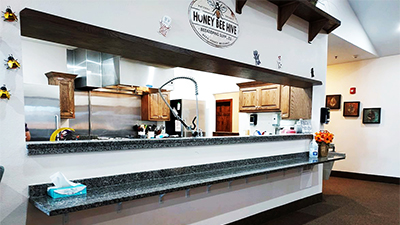
An assisted living structure can feel like a boutique hotel. A memory care home is more detailed to a therapeutic campus, ideally reduced to 12 to 24 citizens per home or home. Size matters. Smaller sized clusters decrease overstimulation, help staff learn each person's rhythms, and make it simpler to embellish regimens. Some operators have actually moved toward true small-house models, with shared open kitchen areas and a constant personnel group. The daily smell of bacon at 8 a.m. Can be a more powerful orientation cue than any calendar.
Look carefully at the visual cues. Shadow boxes outside each home display screen images and objects that carry significance - a Navy insignia, a sewing bobbin, a church bulletin - directing a resident home without a word. Bathrooms utilize contrasting toilet seats and grab bars to make targets obvious, decreasing mishaps. Floors avoid shiny surfaces that appear like water or black patterns that read as holes. Lighting remains soft and even to minimize glare and sundowning, the late-day confusion that agitates many.
Wayfinding is also about design. Circular walking paths keep energy moving. Seating nooks use personal privacy without dead-ends. Outdoor yards are confined yet open to the sky, with raised beds for those who gardened all their lives. The best memory care homes deal with the whole structure as a tool that reduces friction, reduces threat, and supports the brain's staying strengths.
Daily structure that decreases symptoms without medication
Advanced dementia is not just about memory. It is about the brain's capability to process stimuli, sequence steps, and endure modification. Disorganized days, even well-intentioned ones, can feed agitation. Memory care programming acts like scaffolding. Activities are not random time-fillers. They are intentionally chosen to cue long-held procedural memories, offer success without testing, and keep sleep-wake cycles stable.
You see this in a 9 a.m. "work" cart filled with sorting jobs for a retired mechanic who settles when his hands stay busy. You see it in mealtime rituals, with the same seat, the same music volume, the exact same starter course every day so the nervous system knows what follows. You see it in 2 o'clock quiet hours when the system reduces lights and sound to lower late afternoon overstimulation. None of it is glamorous, and all of it works.
Nonpharmacologic tools end up being basic instead of optional extras. Music personalized from a resident's early twenties can calm a spiral in ninety seconds. Gentle hand massage with a familiar scent pairs touch with memory, reducing resistance to care. Montessori-inspired stations - folding towels, setting a table, sanding a block - restore function. When used daily, these supports decrease reliance on sedating medications that bring genuine risks in older adults.
Managing risk without stripping dignity
Families fear two things in sophisticated dementia, frequently in the very same breath. They fear an accident at 2 a.m., and they fear their loved one being dealt with like a child. Great memory care keeps dignity noticeable while it wraps risk with boundaries.
Bathing is a great test case. In assisted living, shower days might be repaired and hurried. In memory care, personnel can choose a resident's best time of day, often mid-morning or after lunch when energy is steadier. They provide options about soap and towel. They inspect water temperature level together. They hint action by step. What appears like a luxury is, in fact, a safety measure. The resident stays calmer, the chance of a slip drops, and the experience ends up being something the individual can accept next time.
Elopement threat is another example. Door alarms and bracelets are not the full plan. Redirection works much better when you have someplace to redirect to - a garden loop, a cabinet with familiar tools, a treat station for those who were constantly hosts. Personnel trained to validate intents, not argue facts, can state, "The bus will be here after lunch, let's get your coat," and suggest it as a bridge, not a lie. The distinction displays in the resident's shoulders.
Behaviors are interaction, and memory care speaks the language
Agitation, calling out, hostility, repetitive concerns, and refusals are hardly ever random. They are expressions of pain or unmet requirement utilizing the tools the brain still has. Memory care homes construct systems to decode those messages.
A repeated 4 a.m. Shout may end up being an unattended reflux pattern. A brand-new clinginess in the late afternoon might be a lighting problem making the hallway appearance threatening. A guy trying to leave every morning at 7 likely kept a work routine for decades. Matching staffing to those predictable cycles makes the whole system calmer.
The distinction between a generalist setting and a memory care home, in practice, is action speed and imagination. Teams keep logs of antecedents and outcomes, then loop back with tries that variety from uncomplicated to artistic. I have actually enjoyed a chef soften a coconut macaroon in warm milk due to the fact that a resident missing out on bottom dentures loved the taste however not the chew. I have actually seen a graveyard shift turn a resident's "need to check the doors" into a joint security round, total with clipboard, ending with tea. Those small customizations amount to safety because they avoid escalations that cause falls or strikes.
Regulation and oversight matter more than a lot of households realize
Regulatory structures for assisted living and memory care vary extensively by state. In some states, "memory care" is a marketing term connected to a guaranteed wing with very little additional requirements. In others, it is an unique license with included personnel training, structure standards, and care procedures. Ask directly how the neighborhood is certified and what that indicates for needed staffing, training hours, and safety features.
Even when policies are thin, insurance providers, healthcare facility partners, and credible operators enforce internal requirements. Many memory care homes conduct official elopement risk assessments at admission and each quarter. Fall committees meet monthly to review incidents and customize environments. Staff total drills for fire, medical emergencies, and missing out on person procedures that include specified time sets off for intensifying beyond the structure. These procedures are unglamorous, and they are a clear separator in between real dementia care and a structure with a keypad.
The cash question, answered candidly
Memory care normally costs more than assisted living, typically 20 to 40 percent more for similar room sizes. The premium reflects greater staffing, a more controlled environment, and specialized programming. In lots of markets, that means a private pay rate that can range from the mid 4 figures to well over ten thousand dollars per month, depending upon location and level of care charges.
Families must ask what is included and what is tiered. Bathing frequency, incontinence supplies, two-person transfers, and medication administration can add charges. Some providers package levels of care into flat plans, that makes budgeting much easier. Others expense à la carte, which rewards self-reliance however can spike costs rapidly if needs rise.
Financial aid is irregular. Veterans benefits, long-lasting care insurance, and, in some states, Medicaid waiver programs help. Waitlists are common for subsidized slots. A frank discussion about runway is vital. I motivate families to sketch best case and worst case timelines and to consider the likely shift to hospice, which can layer services without replacing space and board costs.
When assisted living can still be the best fit
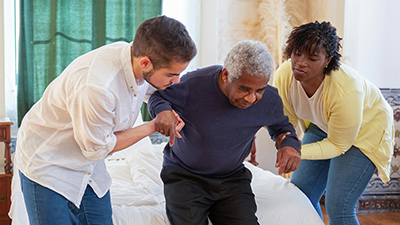
Not everyone with dementia needs a memory care home. I have actually seen homeowners with early to mid-stage illness succeed in assisted living for many years when 2 conditions hold: the individual can follow basic security hints reliably, and the structure runs a robust dementia-friendly program even without a protected system. On campuses that offer both assisted living and memory care, some couples select assisted living together with additional personal task assistance to stay side by side. That can be a dignified compromise for a time.
Other edge cases show up. Rural areas may have limited access to devoted memory care, forcing families to weigh a longer drive versus a regional assisted living with add-on services. Culture and language matter too. A Spanish-speaking resident in an English-only memory care system may be safer physically yet at greater danger of seclusion. In those cases, I look for a supplier ready to bridge the gap with bilingual staff on crucial shifts and family involvement in activity planning.
The secret is to keep reviewing. Dementia modifications. The setting choice that worked last spring can become harmful this winter season. When accidents or distress begin to cluster, the environment often requires to change.
Clear signs that it is time to consider memory care
- Exit-seeking, getting lost outside the apartment or condo, or damaging doors and alarms even after redirection
- Unsafe usage of appliances or medications, like leaving the range on or mishandling pills regardless of reminders
- Frequent falls or near-falls paired with bad risk awareness, such as stepping over absolutely nothing or misjudging furniture
- Escalating agitation, wandering in the evening, or behaviors that overwhelm assisted living personnel capacity
- Care refusals for bathing, dressing, or toileting that produce hygiene or skin risk regardless of coaching
A single episode does not mandate a relocation. Patterns do. When two or three of these products persist over a number of weeks, and when assisted living has actually currently attempted sensible adjustments, a memory care home usually uses a more secure, kinder fit.
What a day can appear like when it works
Picture a resident called Henry, a former bus motorist with moderate to advanced dementia. At his assisted living apartment or condo, nights stretched long. He paced, jiggled the doorknob, set off the alarm 3 times in a week, and his daughter started sleeping with her phone on her chest.
On Henry's very first week in memory care, personnel positioned him near the window table at breakfast, where he could view the parking area. They gave him a clip-on badge that stated Route Manager. After oatmeal and coffee, a caregiver invited him to "examine the path," which indicated a slow circuit of the unit, welcoming next-door neighbors and aligning chairs. At ten, he joined a singalong where the leader understood his favorite Sinatra tune. Lunch was at twelve noon, same chair, very same fork. At two, Henry napped in a recliner near the aquarium. At 4, he assisted stack napkins. At seven, the evening "rounds" with a night aide took fifteen minutes, doors inspected, clipboard signed, lights decreased. He still had dementia. He no longer had a nighttime crisis.
These are small moves, not wonders, and they come from a setting that expects to make them every hour.
How to examine memory care quality throughout a visit
Marketing tours show the best of any structure. Ask for time beyond the fresh cookies and staged activity. Visit twice, one visit after 5 p.m. When staffing thins and reality takes control of. Ask to shadow an activity from start to complete. Enjoy care handoffs at shift change. Listen to sound levels. Smell the air. Examine the calendar against what is really occurring on the floor.
Use your nose for friction. Do citizens wait at the bathroom door, or is there flow? Are walkers parked within reach, or lined up far from chairs? Do personnel wear name badges, welcome residents by name, and cue carefully? Does the nurse speak in specifics or in generalities like "we manage habits"? Specifics signify practice.

Questions that separate marketing from mastery
- How do you determine staffing ratios, and how do they alter on nights and weekends?
- What dementia-specific training do all staff receive, and how frequently do you refresh it?
- Describe your process when a resident begins exit-seeking. What environmental and programmatic modifications do you attempt before medication?
- How do you involve households in care preparation, and how do you interact day-to-day changes?
- What are your criteria for discharge to a greater level of care if requirements increase?
Good operators respond to these without hedging. If you get evasions or platitudes, take note.
The emotional expense of waiting too long
Families sometimes postpone a move because the loved one appears material in assisted living or because the word "locked" feels harsh. I understand that hesitation. I have actually also sat with spouses after a preventable fall or a roaming event that ended two miles away on a winter season night. Advanced dementia shrinks the margin for mistake. The tension on family and on overmatched staff develops quietly up until it cracks.
Moving earlier, before a crisis, generally implies a smoother shift. Citizens adapt better when they still have a bit of reserve. Staff can learn choices before a hospitalization interrupts regular. Families get to end up being partners instead of firemens. The objective is not to rush, it is to move with objective while options are still yours.
Assisted living and memory care can be partners, not rivals
The greatest designs live on schools with both settings and a thoughtful handoff between them. A resident can start in assisted living, sign up with memory-friendly activities there, and receive mild tracking as requirements increase. When security flags appear, the transfer to memory care can take place within a familiar community. Electronic records, shared personnel, and one medical director create connection. Couples can remain on the exact same campus, visiting daily. That connection reduces the human expense of change.
Even without a shared campus, assisted living can be a good recommendation partner to a devoted memory care home across town. When I hear administrators speak respectfully about the other setting's strengths, I know locals will not be stranded at the first sign of trouble.
A path that puts safety very first and preserves personhood
Advanced dementia asks households to make difficult choices. The comfy fiction is that an enjoyable apartment or condo with a few extra suggestions can extend permanently. The truth is that brains in decrease need environments developed for that decrease, staffed by individuals who practice the right moves every day. Memory care homes are constructed for that reality.
Choose a setting that safeguards without smothering, one where routines feel like routines instead of limitations. Try to find staff who do not simply endure habits however interpret them. Expect to pay more, and demand value in the type of calmer days and much safer nights. Use your eyes and your questions to strip away marketing gloss. Above all, act before crisis takes the choice away from you.
I have actually seen households breathe again after a great move, guilt replaced by relief as visits stop feeling like guard shifts and begin seeming like time together. That is the peaceful guarantee of a strong memory care home - safety first, personhood always, and a structure that lets both exist in the exact same day. For advanced dementia, it just exceeds assisted living where it counts.
BeeHive Homes of Plainview provides assisted living care
BeeHive Homes of Plainview provides memory care services
BeeHive Homes of Plainview provides respite care services
BeeHive Homes of Plainview supports assistance with bathing and grooming
BeeHive Homes of Plainview offers private bedrooms with private bathrooms
BeeHive Homes of Plainview provides medication monitoring and documentation
BeeHive Homes of Plainview serves dietitian-approved meals
BeeHive Homes of Plainview provides housekeeping services
BeeHive Homes of Plainview provides laundry services
BeeHive Homes of Plainview offers community dining and social engagement activities
BeeHive Homes of Plainview features life enrichment activities
BeeHive Homes of Plainview supports personal care assistance during meals and daily routines
BeeHive Homes of Plainview promotes frequent physical and mental exercise opportunities
BeeHive Homes of Plainview provides a home-like residential environment
BeeHive Homes of Plainview creates customized care plans as residents’ needs change
BeeHive Homes of Plainview assesses individual resident care needs
BeeHive Homes of Plainview accepts private pay and long-term care insurance
BeeHive Homes of Plainview assists qualified veterans with Aid and Attendance benefits
BeeHive Homes of Plainview encourages meaningful resident-to-staff relationships
BeeHive Homes of Plainview delivers compassionate, attentive senior care focused on dignity and comfort
BeeHive Homes of Plainview has a phone number of (806) 452-5883
BeeHive Homes of Plainview has an address of 1435 Lometa Dr, Plainview, TX 79072
BeeHive Homes of Plainview has a website https://beehivehomes.com/locations/plainview/
BeeHive Homes of Plainview has Google Maps listing https://maps.app.goo.gl/UibVhBNmSuAjkgst5
BeeHive Homes of Plainview has Facebook page https://www.facebook.com/BeeHivePV
BeeHive Homes of Plainview has an YouTube page https://www.youtube.com/@WelcomeHomeBeeHiveHomes
BeeHive Homes of Plainview won Top Assisted Living Homes 2025
BeeHive Homes of Plainview earned Best Customer Service Award 2024
BeeHive Homes of Plainview placed 1st for Senior Living Communities 2025
People Also Ask about BeeHive Homes of Plainview
What is BeeHive Homes of Plainview Living monthly room rate?
The rate depends on the level of care that is needed. We do an initial evaluation for each potential resident to determine the level of care needed. The monthly rate is based on this evaluation. There are no hidden costs or fees
Can residents stay in BeeHive Homes until the end of their life?
Usually yes. There are exceptions, such as when there are safety issues with the resident, or they need 24 hour skilled nursing services
Do we have a nurse on staff?
No, but each BeeHive Home has a consulting Nurse available 24 – 7. if nursing services are needed, a doctor can order home health to come into the home
What are BeeHive Homes’ visiting hours?
Visiting hours are adjusted to accommodate the families and the resident’s needs… just not too early or too late
Do we have couple’s rooms available?
Yes, each home has rooms designed to accommodate couples. Please ask about the availability of these rooms
Where is BeeHive Homes of Plainview located?
BeeHive Homes of Plainview is conveniently located at 1435 Lometa Dr, Plainview, TX 79072. You can easily find directions on Google Maps or call at (806) 452-5883 Monday through Sunday 9:00am to 5:00pm
How can I contact BeeHive Homes of Plainview?
You can contact BeeHive Homes of Plainview by phone at: (806) 452-5883, visit their website at https://beehivehomes.com/locations/plainview/, or connect on social media via Facebook or YouTube
You might take a short drive to the Jimmy Dean Museum. Jimmy Dean Museum offers a low-impact cultural experience appropriate for assisted living, senior care, elderly care, and respite care visits.